Few things frustrate users more than a disposable device dying without warning. You take a draw expecting rich flavor, only to inhale a harsh, burnt dry hit. Traditional single-use devices operate blindly. You never know how much battery or e-liquid actually remains in the tank. Today, consumer demand for predictability and reliability is driving a massive hardware shift. We are moving rapidly away from basic analog designs toward the modern Smart Vape. This transition introduces precise telemetry, output customization, and Bluetooth connectivity.
We will objectively evaluate current vape trends to help you navigate this changing market. You will learn how to distinguish functional hardware upgrades from cosmetic gimmicks. Ultimately, this framework ensures your next purchase delivers real value through enhanced longevity, consistency, and user safety.
Key Takeaways
Evolution of Control: Smart features shift disposables from unpredictable, single-state devices to customizable hardware, solving the primary pain points of dry hits and battery anxiety.
Core Innovations: The transition is anchored by three functional pillars: real-time telemetry (displays), output control (wattage), and connectivity (Bluetooth).
Evaluation Mandate: Not all vape innovation is equal. Buyers must weigh the added cost of digital components against potential failure rates and actual usability improvements.
Compliance Advantage: Advanced features like Bluetooth locking offer unexpected benefits for age-gating and household safety.
The Baseline Problem: Why Traditional Disposables Required an Upgrade
Legacy cig-a-likes and early high-puff disposables suffered from fundamental design flaws. Manufacturers focused heavily on increasing e-liquid capacity. They largely ignored the hardware delivering it. You ended up buying devices containing massive liquid reservoirs powered by inadequate, unmonitored batteries. This imbalance created a frustrating consumer experience. Users essentially rented hardware they could neither control nor monitor. Businesses noticed dropping retention rates as customers grew tired of unpredictable device lifespans.
The core risk of this era was "blind" usage. When a user cannot see their remaining liquid, they inevitably experience a dry hit. This occurs when the heating coil vaporizes dry cotton instead of e-liquid. It delivers an intensely unpleasant, burnt taste. Furthermore, unmonitored batteries degrade silently. You might leave the house expecting a full day of use, only to have the device flash dead an hour later. These mechanical failures bred distrust among daily users.
This stagnant user experience could not last. Fixed-wattage and fixed-airflow systems severely restricted usability. If you wanted a warmer draw or restricted airflow, you simply had no options. Early devices offered a one-size-fits-all solution for a highly subjective habit. Users increasingly sought tailored nicotine delivery. This clear market gap paved the way for the true digital vape, bringing microcontroller precision to single-use platforms.
Categorizing the Solutions: What Defines a "Smart Vape"?
The Display Screen Vape (Telemetry & Monitoring)
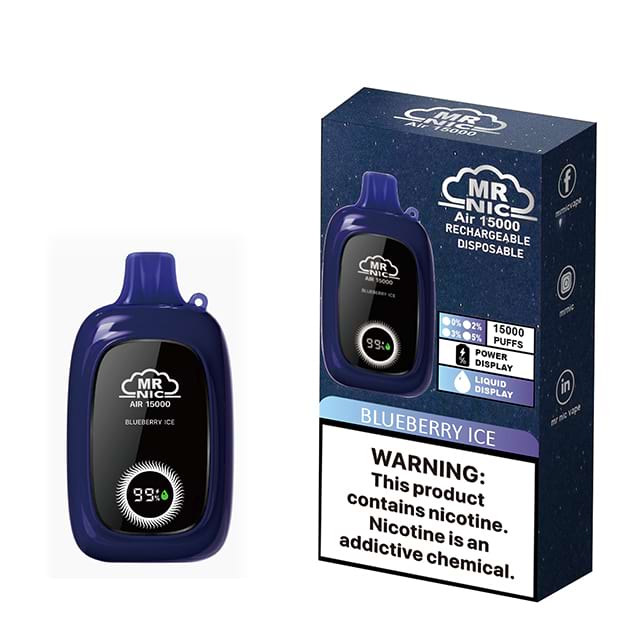
Integrating screens into disposable chassis represents the most visible industry shift. A modern display screen vape utilizes specialized LED or OLED panels. These components pull real-time data from an internal microcontroller. They display vital statistics clearly. You no longer have to guess your device status based on a single blinking light.
These screens focus on two critical metrics: precise battery percentage and estimated e-liquid volume. Battery tracking works via standard voltage monitoring. E-liquid tracking operates differently. Devices calculate fluid depletion algorithmically by multiplying your puff count by the selected wattage. This real-time telemetry eliminates guesswork entirely. It prevents you from prematurely throwing away devices holding usable e-liquid. The value driver is clear: users maximize their purchase while avoiding burnt hits.
Digital Power & Output Management
The days of static, unchangeable power output are ending. We now see widespread adoption of dual-mesh coil systems paired with adjustable wattage. Manufacturers often label these configurations as "Boost" or "Pulse" modes. They allow users to manually dictate how the battery delivers power to the heating element.
This flexibility requires a calculated trade-off. Standard modes conserve energy and stretch the e-liquid supply. Pulse modes activate secondary coils and boost the wattage limit. You experience significantly higher vapor production and richer flavor intensity. However, this aggressive output accelerates battery drain and liquid consumption. Giving users this choice fundamentally changes device interaction. You can conserve power during a commute, then switch to high output at home.
| | | Chart: Standard vs. Pulse Mode Output Characteristics |
Mode Setting | Wattage Output | Coil Activation | Resource Consumption Rate |
Standard / Eco | 10W - 12W | Single Mesh | Low (Maximizes puff count) |
Boost / Pulse | 20W - 24W | Dual Mesh (Simultaneous) | High (Reduces lifespan by ~40%) |
Connectivity and Bluetooth Integration
The integration of Bluetooth chips pushes disposables firmly into IoT (Internet of Things) territory. Smartphone app synchronization bridges the gap between disposable hardware and long-term data tracking. You can connect your device directly to iOS or Android applications.
These apps enable highly functional use cases. Device location tracking acts as an anti-loss feature. You can trigger the device to ring if misplaced nearby. Remote locking allows you to disable the firing mechanism instantly from your phone. Usage analytics provide detailed graphs of your daily puff frequency. These connectivity features transform a passive habit into a quantifiable, manageable routine.
Evaluating Vape Technology: Features vs. Tangible Outcomes
We must apply a skeptical, evidence-oriented lens to current vape technology. It is easy for brands to slap a screen on a plastic tube and raise the price. Buyers need to ask a simple question. Does this feature solve an actual problem, or does it merely add manufacturing cost?
Utility over aesthetics: A battery percentage number solves a problem. A spinning racecar animation does not.
Sensor accuracy: E-liquid sensors must reflect reality. If a device reads 0% liquid but still vapes perfectly for two days, the sensor is useless.
Hardware compatibility: High-drain features require adequately sized batteries to function properly.
Let us analyze the cost-to-lifespan ratio. Consumers often worry about screens draining the battery prematurely. In reality, LED and OLED screens draw minimal power compared to the heating coil. A split-second pulse to a mesh coil uses infinitely more energy than a screen staying lit for ten seconds. The real issue lies in component quality. Cheap digital chips increase defect rates. A malfunctioning sensor can render a full tank of e-liquid inaccessible.
We must also look at consistency metrics. Adjustable wattage directly maintains flavor integrity. As a battery depletes in a standard device, voltage drops. This causes weak, unsatisfying hits near the end of the lifecycle. Smart devices use integrated circuits to regulate voltage output. You get the exact same power on the first puff as you do on the last. This maps directly to a vastly improved end-of-life device experience.
Finally, apply the gimmick test. Filter out superficial additions. Unnecessarily large animations, built-in mini-games, and excessive RGB lighting offer zero pragmatic value. They inflate prices and distract from actual hardware quality. Pragmatic tools, like precise numerical indicators and airflow toggles, represent true value. They directly enhance your control over the vaporizing process.
Implementation Realities, Security, and Compliance Risks
Embedding smart tech into disposable formats introduces complex hardware and regulatory realities. We must examine these devices through an authoritative lens. Industry-standard compliance frameworks are tightening globally. Regulatory bodies scrutinize how single-use devices operate, market themselves, and protect vulnerable populations. Adding silicon chips to the mix complicates this dynamic.
Safety and age-gating represent a massive compliance advantage for smart hardware. Bluetooth locking capabilities serve as a robust mechanism for child resistance. A parent can physically lock the device via their smartphone app. This prevents unauthorized household use. As regulatory bodies demand stricter youth prevention measures, app-gated functionality may soon shift from a luxury feature to a legal requirement.
However, we must acknowledge strict hardware failure risks. More internal components inherently mean higher potential points of failure. Traditional devices consisted of a battery, a sensor, and a coil. Smart variants add microchips, display ribbons, and Bluetooth modules. This complexity increases Dead on Arrival (DOA) rates. Users experience screen ghosting, circuitry shorts, and app pairing failures. Manufacturers must maintain rigorous quality control to justify premium pricing.
Furthermore, e-waste considerations create significant environmental tension. Adding microchips and OLED screens to single-use plastics and lithium batteries exacerbates pollution concerns. Disposing of complex electronics after ten days of use is unsustainable. This pressure actively drives the market toward "hybrid" smart systems. These hybrids pair a reusable, smart battery dock with disposable pre-filled pods. This preserves the smart features while drastically reducing electronic waste.
| | Table: Feature Utility vs. Risk Matrix |
Smart Feature | Primary Benefit | Associated Risk / Drawback |
OLED Telemetry | Prevents dry hits, tracks battery precisely | Susceptible to drop damage / ghosting |
Adjustable Wattage | Consistent flavor, tailored vapor density | Rapid e-liquid depletion on high settings |
Bluetooth Locking | Child-proofing, anti-loss tracking | Requires smartphone pairing, potential pairing bugs |
Shortlisting Logic: How to Choose a Smart Device
Evaluating a smart device before purchase or stocking requires a strict decision framework. The market is saturated. You need actionable criteria to filter out low-quality hardware masquerading as high-end vape innovation. Follow a structured evaluation process.
Telemetry Accuracy: Check the display output. Does the screen offer exact numerical percentages (e.g., 84%)? Avoid devices offering only vague color-coded bars (Green, Yellow, Red). Color bars are outdated and imprecise.
Component Quality: Research the brand's history. Is the manufacturer known for low defect rates in digital components? Established hardware brands usually source better microcontrollers than fly-by-night operations.
Battery Capacity: Look at the mAh rating. The device must feature a minimum of 600mAh to 800mAh. It needs adequate capacity to support both the heating element and the digital chipsets simultaneously without requiring hourly recharges.
Utility over Flash: Evaluate the aesthetic design. Does the device prioritize functional control, like precise airflow valves and wattage toggles? Reject devices focusing primarily on cosmetic lighting or oversized animations.
Once you purchase a device, perform immediate next-step actions upon unboxing. Test the smart features to verify sensor accuracy. Take a long draw on the highest wattage setting. Watch the battery percentage drop. It should decrease smoothly, not in massive, erratic chunks. Pair the Bluetooth app immediately to ensure the firmware communicates properly with your smartphone. If the telemetry stutters out of the box, return the hardware.
Conclusion
The shift toward smart disposables represents a permanent structural change in the industry. It is not a passing trend. Consumers fundamentally demand control, visibility, and reliability from their daily hardware. By integrating screens and output management, manufacturers have effectively cured the blind usage anxiety plaguing earlier generations.
While digital features undoubtedly increase baseline retail costs, the tangible benefits outweigh the premium. Preventing harsh dry hits, reducing prematurely wasted e-liquid, and adding robust household safety controls create real value. Educated buyers who utilize strict shortlisting logic will find that smart hardware delivers a remarkably consistent and satisfying experience from the first puff to the last.
FAQ
Q: Do display screens drain the battery of a smart vape faster?
A: The power draw of LED or OLED screens is entirely negligible compared to the mesh heating coil. Firing the coil requires immense wattage. Illuminating a tiny screen requires very little. However, excellent screen active-time management—where the display turns off quickly after a puff—is a strong indicator of good overall device engineering.
Q: What is the main benefit of a digital vape over a standard disposable?
A: Predictability is the primary benefit. Exact numerical tracking of your remaining battery life and e-liquid volume prevents unexpected device death. This precision ensures you never accidentally inhale a burnt, dry hit because you unknowingly ran out of fluid.
Q: Are Bluetooth-enabled vapes secure?
A: Yes, they are generally secure. You should address data privacy simply. Most synchronized companion apps do not require personal identification or sensitive data to function. The primary benefit of this connectivity is local proximity locking, which significantly enhances household child safety.
Q: Is it worth paying a premium for vape innovation like wattage control?
A: Yes, it is worth it for daily users. If you frequently experience flavor degradation as your battery depletes, wattage control solves this. The internal circuits regulate power delivery, ensuring a consistently dense and flavorful draw from the moment you open the box until the device is empty.


